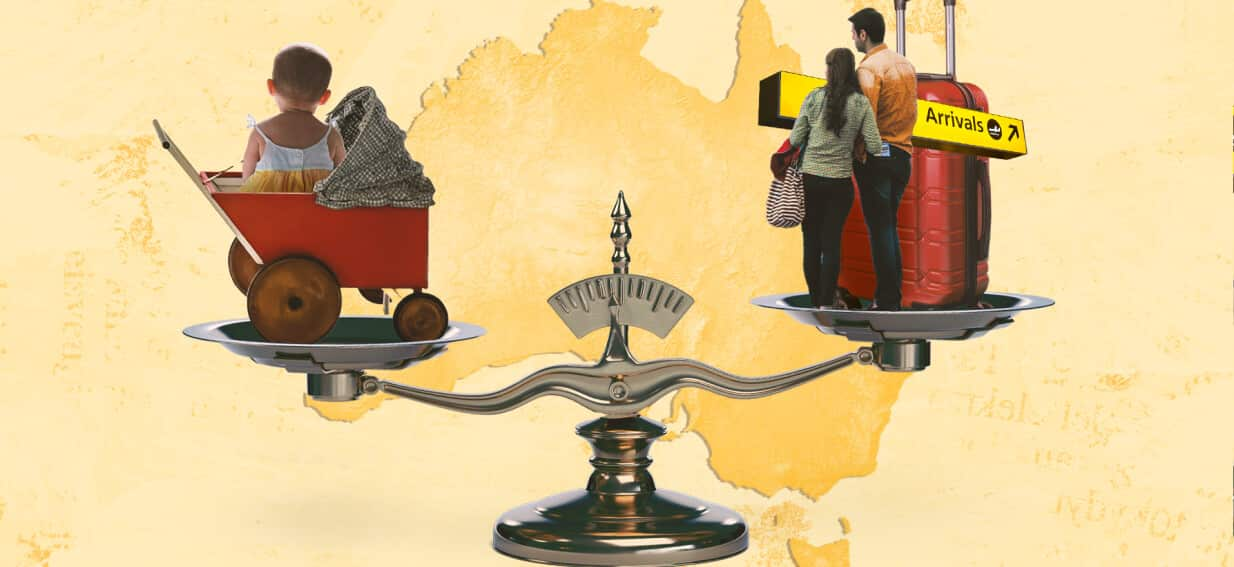
Migration fill baby gap is now a headline in Canberra as the nation grapples with the steepest fall in birth rates since the 1970s.
Why the baby boom is over
Australia’s total fertility rate slipped to 1.61 children per woman in the latest ABS release, well below the replacement level of 2.1. Economic uncertainty, rising housing costs and a cultural shift towards later parenthood have all contributed. Young couples are choosing to rent in the inner‑city suburbs of Sydney and Melbourne rather than buying a home in the outer‑lying regions, making the financial calculus of raising a family less appealing.
What the numbers mean for the economy
Fewer births translate into a shrinking future labour force, a concern for a country that relies on a growing pool of workers to sustain its superannuation system and health‑care funding. The Treasury’s latest projection warns that, without a boost in the working‑age population, GDP growth could lag behind the OECD average by 2035.
The migration solution
Historically, migration has acted as a demographic stabiliser. In the post‑World War II era, waves of European migrants offset a low birth rate and helped build the suburbs that define modern Australia. Today, the Department of Home Affairs targets a net overseas migration (NOM) of 190,000 people for the 2024‑25 financial year, a figure that, if achieved, would add roughly 0.6% to the population each year.
Proponents argue that skilled migrants not only fill labour shortages but also tend to have higher fertility rates than native‑born Australians, especially in the early years of settlement. A 2022 study by the University of Queensland found that migrants from South‑East Asia and the Middle East had a combined average of 2.3 children per woman, nudging the national average upward.
Challenges and criticisms
Critics caution that migration alone cannot replace the cultural and social benefits of a robust native birth rate. "We need families, not just workers," said Dr Lara Nguyen, a demographer at the Australian Institute of Family Studies. She points out that migrants often face integration hurdles – from credential recognition to housing affordability – which can delay family formation.
There are also political sensitivities. The recent debate over the "population‑growth target" has split parties, with some accusing the government of using migration as a "quick fix" while ignoring the need for policies that support young Australians to start families, such as affordable childcare, parental leave incentives and housing reforms.
Policy pathways forward
Experts suggest a dual‑track approach: maintain a steady flow of skilled migrants while investing in domestic family‑friendly policies. The federal budget could allocate additional funds to the National Housing Finance and Investment Corporation (NHFIC) to subsidise first‑home purchases for couples with children. Meanwhile, expanding the Child Care Subsidy and introducing a flexible parental‑leave scheme could make parenthood more financially viable.
State governments are also playing a role. Queensland’s "Family First" programme offers a one‑off grant to families who have a third child, while Victoria’s recent "Baby Bonus" pilot provides a modest cash injection for newborns in low‑income households.
Looking ahead
Whether migration can fully plug the baby gap remains uncertain, but the consensus among demographers is clear: a balanced strategy that welcomes newcomers while empowering Australians to have children will be the most sustainable path.
As the nation watches the next census data roll in, policymakers, businesses and everyday citizens will need to decide if the answer lies in the hands of migrants, in the hearts of Aussie families, or in a combination of both.
Comments
Post a Comment