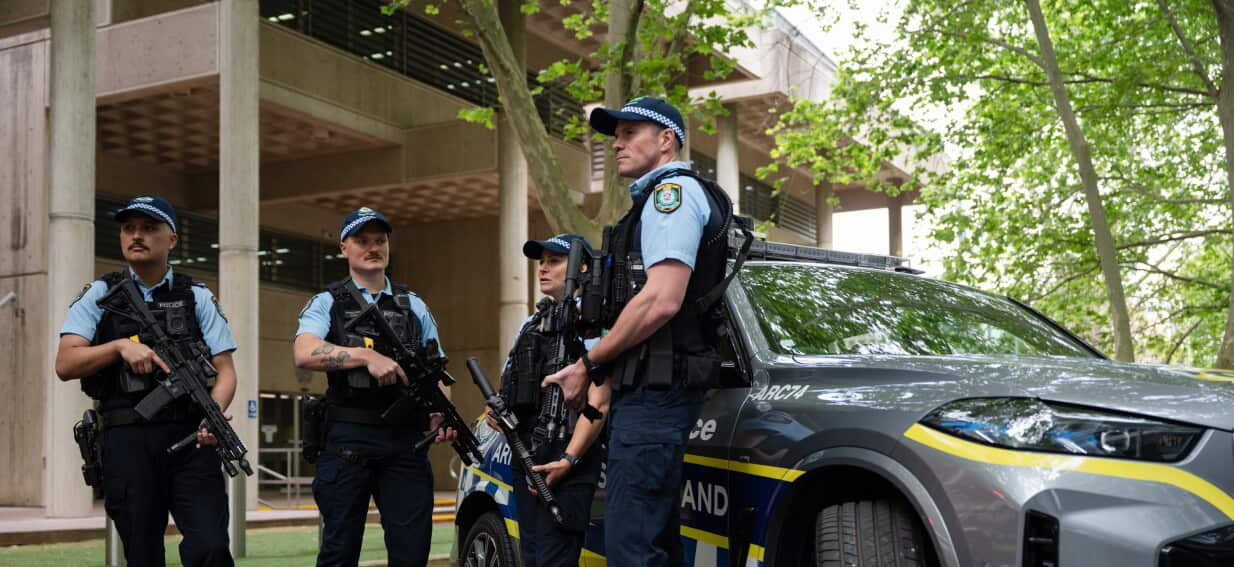
Police tactical unit equipped with military‑style rifles has been launched in New South Wales, prompting human rights advocates to question whether the move prioritises public safety or intimidation.
The new specialist team, officially named the Armed Response Group, was unveiled by the NSW Police Force on Tuesday at a ceremony in Parramatta. Members will operate with assault rifles, body armour and advanced surveillance gear, mirroring capabilities traditionally reserved for the Australian Defence Force. The decision follows a series of high‑profile incidents, including the 2023 Sydney hostage situation and a surge in armed robberies across the eastern states.
Why the police are turning to military equipment
Senior police officials argue that the escalation in violent crime, particularly the proliferation of semi‑automatic weapons among organised gangs, has left frontline officers vulnerable. "Our officers need the tools to respond decisively to threats that are now commonplace on our streets," said Commissioner Karen Webb. The Armed Response Group will be deployed in high‑risk operations such as active‑shooter scenarios, sieges and counter‑terrorism raids, with the aim of minimising casualties and restoring order swiftly.
Human rights groups sound the alarm
Human rights organisations, including the Australian Human Rights Commission and the Civil Liberties Australia, have voiced strong concerns. They warn that arming police with military‑grade firearms could erode public trust and lead to an over‑militarisation of law enforcement. "The line between policing and warfare must not be blurred," said Dr Megan O'Connor, a senior researcher at the commission. "We risk normalising intimidation as a policing tactic, which is incompatible with democratic principles and community safety.
Legal and constitutional considerations
Australia’s Constitution does not explicitly limit the type of equipment police may use, but the Commonwealth and state governments are bound by international human rights treaties, such as the International Covenant on Civil and Political Rights. Legal scholars argue that any deployment of lethal force must be proportionate, necessary and subject to robust oversight. "If the police are to carry assault rifles, there must be transparent accountability mechanisms, independent investigations and clear rules of engagement," noted Professor James McAllister of the University of Sydney Law School.
Community response in the suburbs
Residents in several Sydney suburbs have organised town‑hall meetings to discuss the implications of the new unit. While some locals, particularly those in high‑crime areas, welcome the added security, others fear an increased police presence could lead to more stop‑and‑search incidents and racial profiling. "We want safety, not a militarised force patrolling our streets," said community activist Lila Nguyen, who represents a multicultural neighbourhood in Bankstown.
Comparisons with overseas models
Australia is not the first democracy to equip police with military‑style weapons. The United Kingdom’s armed police units and the United States’ SWAT teams have long operated with rifles and tactical gear. However, critics point out that in those jurisdictions, stringent use‑of‑force policies and independent oversight bodies have been established to curb abuse. "Any Australian model must learn from both the successes and the pitfalls observed abroad," said former NSW Attorney‑General Mark Speakman.
What the future holds
The Armed Response Group is slated to become fully operational by early 2025, with an initial cadre of 150 officers. Training will be conducted in partnership with the Australian Defence Force, focusing on precision shooting, crisis negotiation and de‑escalation techniques. The police force has pledged to publish annual reports on the unit’s deployment, outcomes and any complaints lodged against its members.
As the debate continues, the balance between equipping officers to confront modern threats and preserving civil liberties remains a delicate one. Australians will be watching closely to see whether the police tactical unit enhances public safety without compromising the democratic values that underpin the nation.