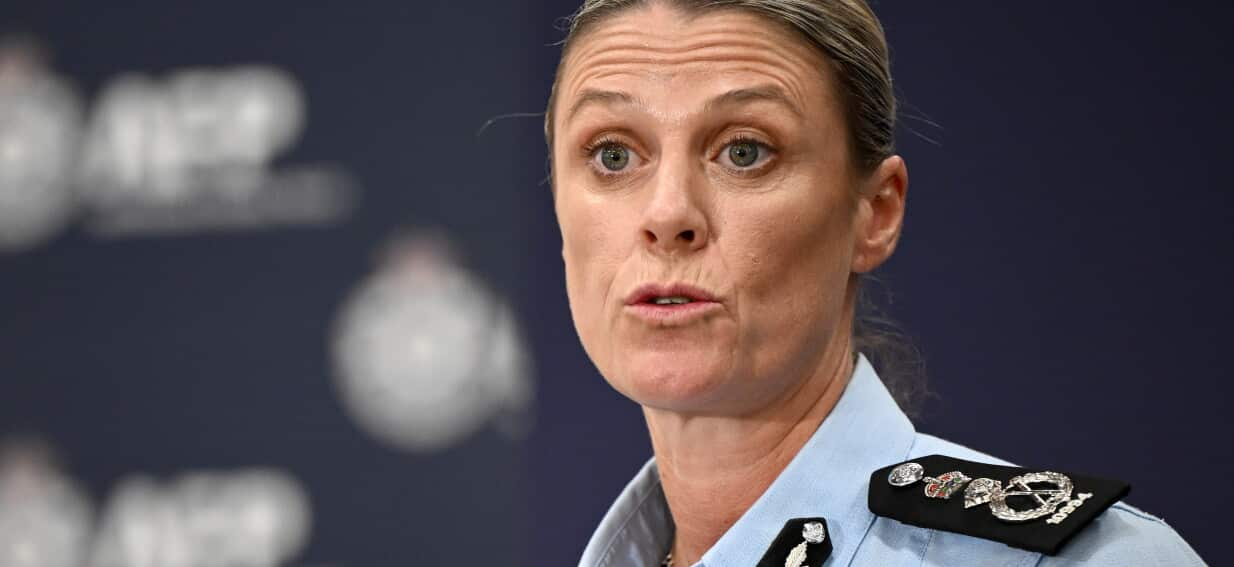
Online hate warning from Australia's police chief underscores the growing danger of digital harassment and extremist content. In a televised interview on the ABC News programme, Commissioner Katarina Carroll urged Australians to recognise how seemingly harmless online comments can spiral into real‑world threats, violence and even loss of life. She highlighted recent incidents where online abuse escalated into physical attacks, prompting law enforcement agencies to prioritise the monitoring of hate speech on social media platforms.
The chief's message
Commissioner Carroll stressed that the police force is not merely a reactive body but a proactive partner in safeguarding the digital sphere. "We are seeing a clear link between online hate and offline aggression," she said, adding that the National Police Force has allocated additional resources to trace anonymous accounts and collaborate with tech companies. The warning comes amid a surge in reports of targeted harassment against minority groups, including Aboriginal and Torres Strait Islander peoples, LGBTIQ+ individuals, and religious minorities.
The rise of digital hate in Australia
According to the Australian eSafety Commissioner, complaints about online hate have risen by 38 per cent over the past two years. Platforms such as Facebook, Instagram and TikTok have become fertile ground for extremist narratives, often cloaked in memes or coded language that evades detection. Researchers at the University of Sydney note that the anonymity afforded by the internet can embolden users to express views they would never voice in person, leading to a toxic online culture that normalises violence.
Case studies
One high‑profile case involved a series of threatening messages sent to a Muslim family in Melbourne, culminating in a physical intrusion at their home. Another incident saw a group of teenagers in Brisbane harassing an Indigenous activist online, later tracking her down and vandalising her property. Both cases illustrate the pathway from digital vitriol to tangible harm, a pattern Commissioner Carroll warned must be broken.
Impact on communities
Victims of online hate often experience severe mental health repercussions, including anxiety, depression and post‑traumatic stress. Community organisations report a rise in calls to support hotlines, with many individuals feeling unsafe in both virtual and physical spaces. "When hate spreads online, it seeps into everyday life," said Dr. Maya Patel, a psychologist at the Royal Melbourne Hospital. "The sense of isolation and fear can be overwhelming, especially for young people who spend a large portion of their day on social media."
Government response and policy
The federal government has introduced the Online Safety Act 2021, which empowers the eSafety Commissioner to issue removal notices and impose fines on platforms that fail to act. However, critics argue that legislation lags behind the rapid evolution of technology. Opposition leader Anthony Albanese pledged to establish a cross‑party taskforce to review the effectiveness of current laws and explore stronger penalties for hate speech.
State police forces are also enhancing their digital capabilities. In New South Wales, the Police Force’s Digital Crime Unit has launched a new programme to train officers in cyber‑investigation techniques, while Victoria has partnered with universities to develop AI tools that can flag extremist content in real time.
What Australians can do
Experts advise the public to adopt a proactive stance: report abusive content, support victims, and engage in digital literacy programmes. The eSafety Commissioner offers a free online guide on recognising and responding to hate speech. Additionally, community groups are encouraging “kindness campaigns” on social media, aiming to flood platforms with positive messages that drown out negativity.
Commissioner Carroll concluded by urging Australians to remember that "the internet is a shared space, and we all have a responsibility to keep it safe." Her warning serves as a call to action for individuals, tech companies and policymakers alike to stem the tide of online hate before it erupts into real‑world violence.