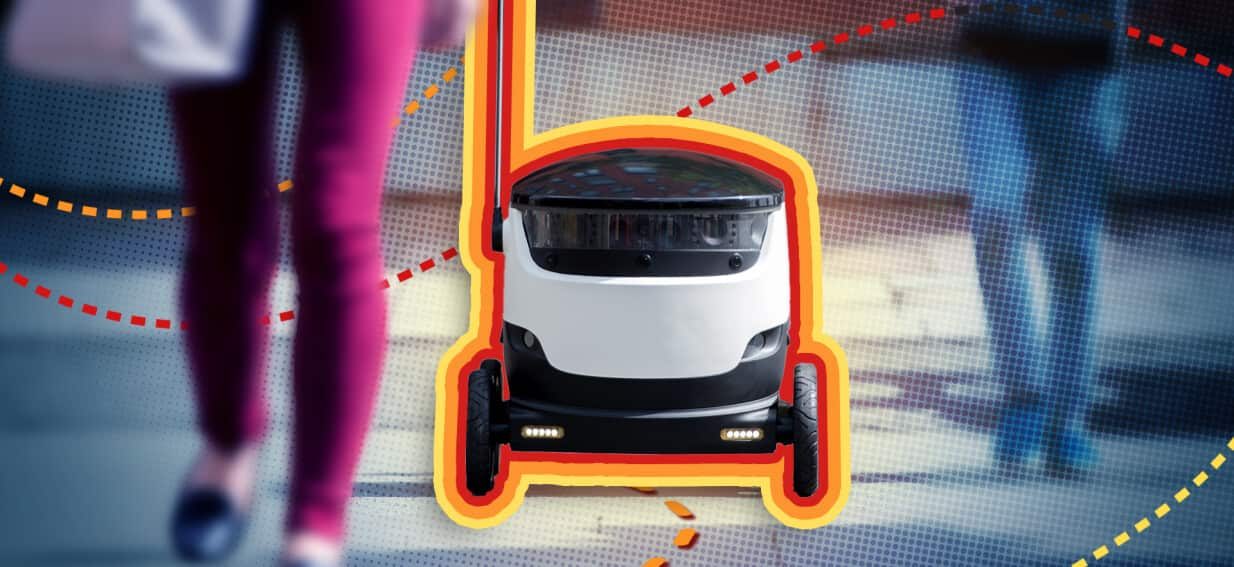
Delivery robots Australia are facing a new wave of challenges as they navigate rail tracks, busy streets and even vigilant neighbourhood watch groups. The once‑novel sight of small, wheeled couriers gliding past cafés and office blocks is now prompting city councils, rail operators and community groups to reconsider how these machines fit into the urban landscape.
From sidewalk trials to railway incidents
In early 2023, several start‑ups launched pilot programmes in Sydney, Melbourne and Brisbane, promising faster, greener last‑mile deliveries. The robots, typically no larger than a suitcase and equipped with sensors, could travel up to 6 km/h, avoiding pedestrians and obeying traffic lights. However, incidents began to surface when a delivery robot in Melbourne’s Docklands was knocked off a pedestrian bridge onto the railway line below, narrowly missing an oncoming train. A similar mishap in Sydney saw a robot stray onto the tracks at Central Station, prompting a temporary shutdown of the service while safety protocols were reviewed.
Vigilante backlash and public safety concerns
Beyond the railways, a growing number of community groups have taken matters into their own hands. In regional Queensland, a neighbourhood watch collective reported “vigilante” actions after a robot repeatedly attempted to deliver parcels to a private residence that had opted out of the service. Members placed physical barriers and even sprayed paint on the robots to deter them. While the groups argue they are protecting privacy and safety, critics say such actions risk damaging public property and set a dangerous precedent for dealing with emerging technology.
Legal grey zones
Australian law currently classifies delivery robots as “low‑risk” autonomous devices, exempt from many of the regulations that apply to larger driverless vehicles. Yet the incidents have exposed gaps in legislation, especially concerning operation on rail property, which is governed by the Australian Rail Track Corporation (ARTC) and state rail agencies. Legal experts suggest that without clear statutes, liability for accidents remains murky, leaving companies, insurers and victims in a legal limbo.
Industry response and safety upgrades
Companies behind the robots have reacted swiftly. RoboCourier, a Sydney‑based firm, announced a software update that adds geofencing to prevent entry onto rail corridors and restricted zones identified by local councils. The update also incorporates a “human‑override” button that allows a remote operator to intervene if the robot encounters an unexpected obstacle. Meanwhile, logistics giant Australia Post has partnered with a robotics start‑up to trial a hybrid model where human couriers accompany robots through high‑risk areas, blending automation with traditional delivery methods.
Collaboration with rail authorities
The ARTC has opened a dialogue with technology providers, proposing a joint “Rail‑Safe Corridor” programme. Under the scheme, robots equipped with specialised sensors would be granted limited access to rail‑adjacent pathways, provided they meet stringent safety criteria and undergo regular audits. Pilot trials are slated for the next financial year at selected freight yards in Perth and Adelaide.
What this means for Australian consumers
For everyday Australians, the debate translates into a balance between convenience and safety. A recent survey by the University of New South Wales found that 62% of respondents were excited about faster deliveries, but 48% expressed concerns about robots on sidewalks and near public transport hubs. Consumer advocacy group Choice recommends clear labelling of robot‑delivered parcels and the option to opt‑out of automated deliveries entirely.
Future outlook
Despite the setbacks, the momentum behind autonomous last‑mile delivery remains strong. The Australian government’s National Innovation and Science Agenda earmarks $45 million over the next five years for “smart mobility” projects, including autonomous delivery trials. As technology matures and regulatory frameworks catch up, delivery robots are likely to become a familiar sight in city centres, suburbs and even regional towns.
In the meantime, the industry, regulators and community groups must work together to ensure that the rollout of delivery robots Australia does not repeat the mistakes of the past. By prioritising safety, transparency and public engagement, the promise of greener, faster deliveries can be realised without compromising the safety of rail workers, pedestrians or the broader community.